Sermon of Imam al-Hasan (PBUH) on the Peace Treaty
(peace be upon him) on the Peace Treaty
This narration is reported in al-Amālī of Shaykh al-Tusi and is also cited in Bihār al-Anwār (Beirut edition, vol. 10, p. 138).
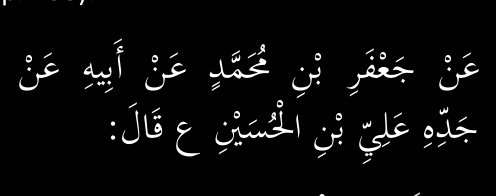
From Ja‘far ibn Muhammad (peace be upon him), from his father, from his grandfather Ali ibn al-Husayn (p): He said:
When al-Hasan ibn Ali (p) resolved to make peace with Mu’awiya, he went out until he met him.
When they came together, Mu’awiyah stood as a speaker. He ascended the pulpit and ordered al- Hasan (p) to stand one step below him.
Then Mu’awiyah spoke and said: “O people! This is al-Hasan ibn Ali, the son of Fatimah. He has deemed us worthy of the caliphate and has not deemed himself worthy of it. And he has come to us to pledge allegiance willingly.”
Then he said, “Stand, O Hasan.” So, al-Hasan (p) stood and delivered a sermon.
Imam al-Hasan (p) opened his sermon by praising Allah and testifying to His oneness and to the message of His Prophet (peace be upon him and his family). He reminded the people of the honor Allah granted the Ahl al-Bayt (p), their purity, and their right to leadership based on the Qur’an and the Prophet’s (p) clear words and actions. He recalled the virtues of his father, Ali ibn Abi Talib (p), as the first believer and the most trusted companion of the Prophet (p), and how the Ummah turned away from this truth after the Prophet’s (p) death. Their rights were denied, including Lady Fatimah’s (p) inheritance, and they endured marginalization and injustice. Yet, like Prophet Harun (p), they remained patient when support was lacking. The Imam (p) presented these truths before turning to directly refute Mu‘awiyah’s claim.
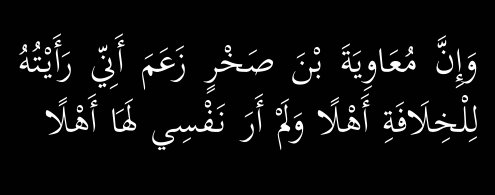
Mu'awiyah ibn Sakhr claimed that I considered him worthy of the caliphate and did not see myself as worthy of it.

Mu'awiyah has lied, by Allah.
For we are the most entitled of people to the people — in the Book of Allah and on the tongue of the Messenger of Allah (p).
However, we, the Ahl al-Bayt, have always been feared, wronged, and oppressed since the Messenger of Allah (p) was taken.
So, may Allah judge between us and the one who took our right, imposed himself over us, and placed the burdens of the people upon our shoulders,
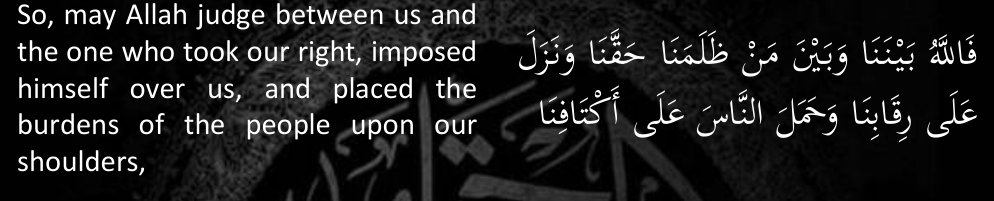
and deprived us of our share from the spoils and war gains that Allah assigned to us in His Book, and withheld from our mother Fatimah (p) her inheritance from her father.
We do not name anyone specifically.
But I swear by Allah, a true and binding oath: if the people had listened to the words of Allah and His Messenger, the sky would have poured its rain for them, and the earth would have yielded its blessings, and two swords would never have and they would have lived in prosperity until the Day of Judgment.
Then, O Mu'awiyah, you would never have even hoped for it.

But when it was first pulled from its rightful place and removed from its foundations, Quraysh competed over it among themselves and tossed it around like a ball.
Until you, O Mu'awiyah, and those after you began to covet it.
While the Messenger of Allah (p) indeed said: No nation has ever entrusted its leadership to a man while there was someone more knowledgeable among them, except that their condition continued to decline until they returned to what they had abandoned.
The Children of Israel, who were the followers of Moses (p), abandoned his brother Harun, who was his successor and minister, and clung to the calf, obeying their Samaritan, even though they knew he was the appointed successor of Moses (p).
And this Ummah heard the Messenger of Allah (p) say to my father: “He is to me as Harun was to Musa—except there is no prophet after me.”
And they saw the Messenger of Allah (p) when he appointed him for them at Ghadir Khumm, and they heard him proclaim his guardianship.
Then he instructed that those present should inform those who were absent.

The Messenger of Allah (p) fled to the cave out of fear of his people when they conspired against him, while he was still calling them— because he had no helpers against them.
Had he found supporters against them, he would have fought them.
And my father withheld his hand, pleaded with them, and sought help from his companions—but he was not aided nor supported.
Had he found supporters against them, he would not have complied with them.
And he was granted leeway, just as the Prophet (p) was granted leeway.
And this Ummah has abandoned me, and I have pledged allegiance to you, O son of Harb.
Had I found loyal supporters against you, I would never have pledged allegiance to you.
And Allah, the Mighty and Majestic, granted Harun leeway when his people weakened and opposed him.
Likewise, my father and I were given leeway by Allah when the Ummah abandoned us, gave allegiance to someone other than us, and we found no helpers against him.
Indeed, these are patterns and precedents that follow one another.
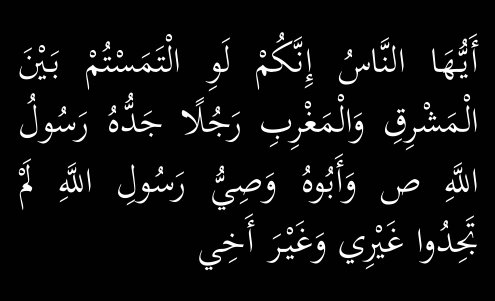
O people, if you searched from East to West for a man whose grandfather is the Messenger of Allah (p), and whose father is the successor of the Messenger of Allah, you would find none but me and my brother.
So be mindful of Allah, and do not go astray after the clarification.فَات َّقُواََّْاّللَْوَلَْت But how can that be with you, and how far you are from that!
Know that I have given allegiance to this—and he pointed with his hand to Mu'awiyah.
Yet I do not know; perhaps it is a trial for you and a temporary enjoyment. [Qur’an 21:111]
O people, no one is blamed for leaving aside his right, but blame falls upon the one who takes what is not his.
And every correct action is beneficial, and every mistake is harmful to those who commit it.
There was a case which Solomon understood, and it benefited Solomon without harming David (p).
As for kinship, it has even helped the disbeliever—and by Allah, it is of greater benefit to the believer.
The Messenger of Allah (p) said to his uncle Abu Talib as he lay dying:
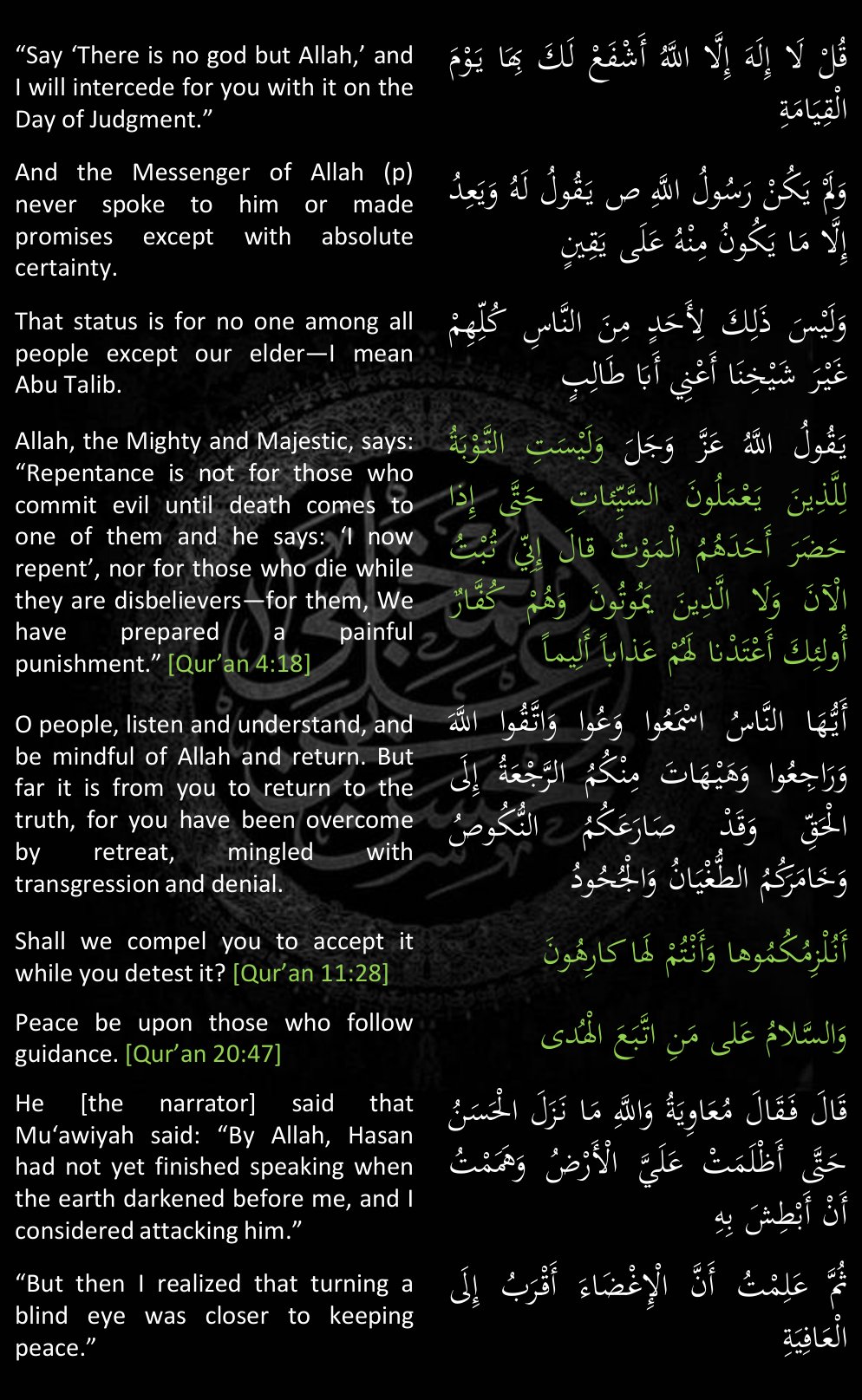
“Say ‘There is no god but Allah,’ and I will intercede for you with it on the Day of Judgment.”
And the Messenger of Allah (p) never spoke to him or made promises except with absolute certainty.
That status is for no one among all people except our elder—I mean Abu Talib.
Allah, the Mighty and Majestic, says: “Repentance is not for those who commit evil until death comes to one of them and he says: ‘I now repent’, nor for those who die while they are disbelievers—for them, We have prepared a painful punishment.” [Qur’an 4:18]
O people, listen and understand, and be mindful of Allah and return. But far it is from you to return to the truth, for you have been overcome by retreat, mingled with transgression and denial.
Shall we compel you to accept it
Peace be upon those who follow guidance. [Qur’an 20:47]
He [the narrator] said that Mu‘awiyah said: “By Allah, Hasan had not yet finished speaking when the earth darkened before me, and I considered attacking him.”
“But then I realized that turning a blind eye was closer to keeping peace.”

www.misbah-inc.com