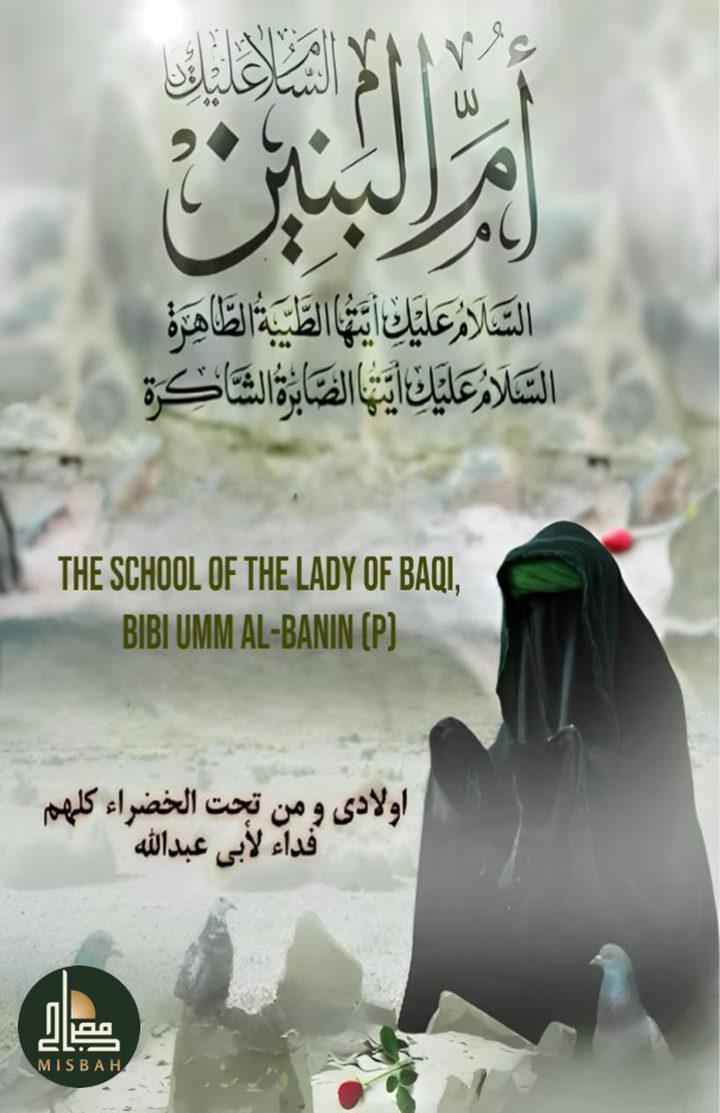
The School of the Lady of Baqi, Bibi Umm al-Banin (SA) — Summary
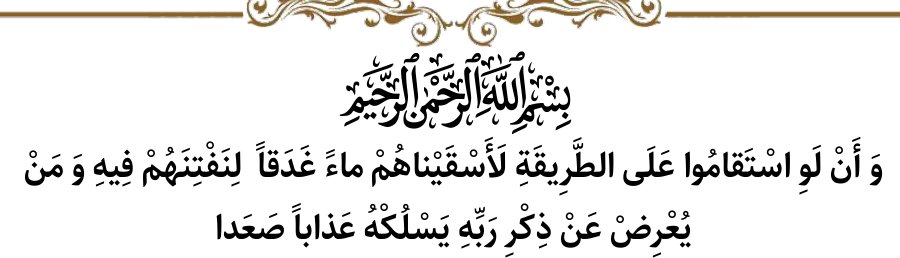
Had they (jinn and mankind) remained steadfast in their religion (Islam), We would certainly have given them abundant water to drink as a trial for them. God will make those who disregard the guidance from their Lord suffer increasing torment. (Surah Mubaraka Jin, vv. 16-17)
Introduction
The Noble Qur’an, which is the caller and guide to the “truth of Tawheed,” presents the trial and test of creation with the “Karbala of Aba Abdillah al- Hussain (p):

(1) “If they had remained steadfast upon the path…” (Surah al-Jinn, v. 16), the path here refers to the Wilayah of Ali (p). “…so that We might test them” (Surah al-Jinn, v. 17), meaning, by the killing of Hussain (p) they would be examined and tested [to determine their steadfastness upon the path of Wilayah]. In other words, the measure of creation’s steadfastness in the great matter of the Wilayah of the Supreme Wali (Guardian) of God, which is itself the reality of Tawheed, is determined through the Karbala of Aba Abdillah al- Hussain (p). And since it has been said:

2 ) “Our matter (command) is difficult and extremely hard, and none recognizes it nor acknowledges it… except a believer whose heart God has tested with faith.” Success and salvation in this divine trial is attained only through absolute orientation toward the Wali of God, that is, by dissolving oneself in his (Wali of God) sacred existence.
The most eminent examples of the fortunate and successful in this great trial are the companions of Hussain, “the souls who were dissolved in your sanctuary” (p). They are the very ones whom Aba Abdillah al-Hussain (p) described with his blessed word as “the most loyal, the most virtuous, and the best of companions.” (3) Among them, the leader and guide of all the companions of Hussain (p), whose lofty rank was the envy of them all, is our master, the Moon of the Hashemites, Abal-Fadl al-Abbas (p). He gave the most complete and perfect expression to steadfastness upon the path of Wilayah through sacrificing himself for his master, as is mentioned in Ziyarat al-Nahiya al-Muqaddasa:

The blessed being of the Moon of the Hashemites, Abbas son of Amir al-Mu’minin (p), was raised in the sanctuary and care of a mother who taught him, from the very first steps he took in this world, the path of self-sacrifice for the Master. This spirit of devotion and sacrifice was the fruit of a school whose foundation was laid by the Lady of Baqi, Lady Umm al-Banin (p), when she declared:

( 5 ) “My sons, and everyone beneath the sky, are all sacrifices for Aba Abdillah al- Hussain (p).”
An unparalleled foundation, one that history had never before witnessed. Therefore, those who seek success and salvation in the great divine trial must become students of this school, whose teachings presented to the world a moon like Abbas, son of Amir al-Mu’minin (p). With this introduction, we turn to the luminous school of the Lady of Baqi, so that we may learn from her blessed presence the true meaning of self-sacrifice for Aba Abdillah (p). ┅═✧❁ REFERENCES ❁✧═┅ (1). Tafsīr Furāt al-Kūfī, p. 511; Tafsīr al-Qummī, vol. 2, p. 389 (2). Tafsīr Furāt al-Kūfī, p. 428; Bihār al-Anwār, vol. 2, p. 185 (3). al-Irshād fī Maʿrifat Ḥujaj Allāh ʿalā al-ʿIbād, vol. 2, p. 91 [“Indeed, I know not of companions more loyal or better than my companions, nor of a household more righteous and closer in kinship than my household.”] (4). A passage from Ziyārat al-Nāḥiya al-Muqaddasa (5). Tanqīḥ al-Maqāl fī ʿIlm al-Rijāl, vol. 3, p. 70 2
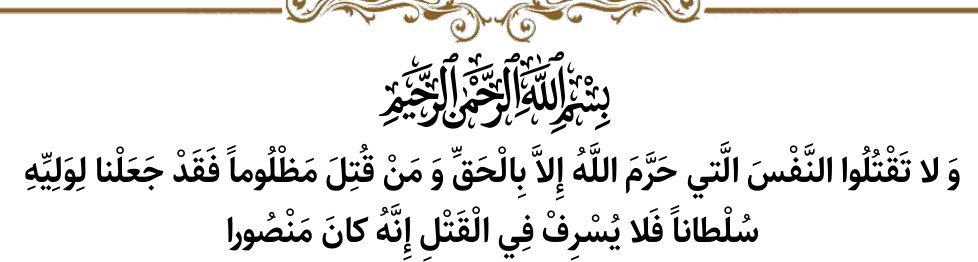
Do not kill the soul whom Allah has forbidden except by right. If he is slain unjustly, We have given his heir authority. But let him not exceed the limit in slaying, for he will be helped. (Surah Mubaraka al-Isra v. 33)
Part One
Lady Umm al-Banin (p) is a noblewoman who, through her way of life and conduct, manifested the reality that all the people of the earth are a ransom for Imam Aba Abdillah al-Hussain (p). According to the statement of Imam al-Sadiq (p), in his interpretation of verse 33 of Surah al-Isra, even if every person on earth were to be killed in retaliation and vengeance for the blood of Tharallah (the Blood of God), Aba Abdillah al-Hussain (p), it would not be considered excessive in killing. In other words, true retaliation has not yet been fully realized for it to be considered excessive:

Lady Umm al-Banin (p), the mother of the four martyred sons, gave life to the meaning of this blessed verse of the Holy Qur’an through her luminous words upon hearing the news of the martyrdom of her sons, our master Abal-Fadl al-Abbas and his brothers (PBUT). With her response, she revealed to all of creation, for eternity, the true implication and interpretation of this noble verse that:

If all the people of the earth were to be killed, sacrificed, and give their lives for Tharallah, it would not be considered excessive!
And that statement was, when she said:

My children and all the people of the earth are sacrifices for Imam Aba Abdillah al-Hussain (p) (2).
A subtle point seen in this statement is that the noble lady, Umm al-ʿAbbās (p), when expressing the idea of the entire people of the earth being sacrifices for Imam Aba Abdillah al-Hussain (p), first refers to “her own children”, and only afterward mentions the rest of creation and the inhabitants of the earth, “and all who are under the sky.”
This subtle point indicates that in the matter of sacrifice for Imam Aba Abdillah al-Hussain (p), the children of Lady Umm al-Banin (p), who are the noblest, most virtuous, and most honorable among the people of the earth [after the sacred members of Ahlul Bait (PBUTh)], are the ones she first offers as a sacrifice for Imam Hussain (p). Given that, it naturally follows that the rest of the people of the earth and all who are under the sky are, expected to be sacrifices for Imam Aba Abdillah al-Hussain (p).
In other words, Lady of Baqīʿ, Umm al-Banin (p), by offering as sacrifice the most noble and virtuous of the people of the earth and heavens for Imam Aba Abdillah al-Hussain (p), gave meaning to the noble verse: “But let him not exceed the limit in slaying” (Surah al-Isra, v. 33), and through her own action, she manifested this sacrifice in reality. Therefore, she affirmed and actualized, in this world, that all of creation is a ransom and sacrifice for Imam Aba Abdillah al-Hussain (p).
┅═✧❁ REFERENCES ❁✧═┅
(1). Al-Kāfī, v. 8, p. 255; Al-Burhān fī Tafsīr al-Qur’ān, v. 3, p. 528 (2). Tanqīḥ al-Maqāl fī ʿIlm al-Rijāl, v. 3, p. 70 4
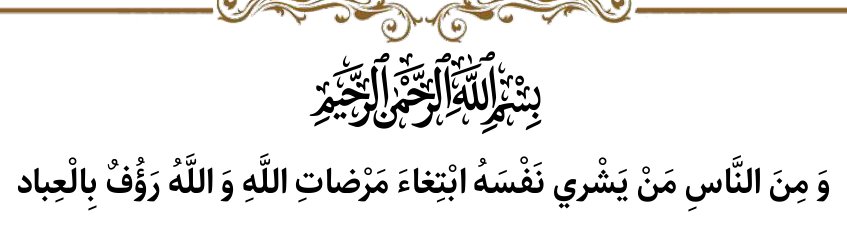
But there are among people he who would give away his life desiring the Pleasure of Allah. Allah is Gentle to His worshipers.
(Surah Mubaraka al-Baqarah, v. 207)
Part Two
The noble verse above describes the status of self-sacrifice and giving one’s life in the path of God. It is a praise of the believer(s) who, in their mission to call the servants towards obedience to God, willingly endures all manner of trials and hardships. Such a person has no desire or will of their own against the command and will of their Master, and remains in full submission to the Lord, as Imam Hassan al-Askari (p) said:

1 ) “‘And the one who sacrifices his soul’, that is, sells it ‘in the path of God’s pleasure’ (Surah al-Baqarah, v. 207), fulfills obedience to God and calls others to it, bearing every harm and hardship along the way. Such a person is like one who has traded away his life and surrendered it in exchange for attaining God’s satisfaction; and so, it no longer matters to him what trials may befall him thereafter!”
According to the commentaries, the word "yashrī" in this noble verse signifies the offering of one's life, a profound act of self-sacrifice and great devotion (fidāʾ ʿaẓīm).

The great sacrifice (fidāʾ ʿaẓīm) has been manifested only in the Karbala of Aba Abdillah al-Hussain (p) (4).

(Surah al-Saffat, v. 107)
Thus, the phrase “yashrī nafsah” finds its most complete meaning in the land of Karbala. It is in this sacred battlefield that those who gave their lives, wealth, and very selves in sacrifice for their Master, and were fully dissolved in His will [that is, they had no desire or will of their own against the will of their Master and were in total submission to the Lord], were none other than the companions of Hussain (p). They were the ones who offered their lives in support of the establishment of the Wilayah of Hussain (p).
A Wilayah whose establishment is none other than the establishment of enjoining good and forbidding evil:

And Amir al-Mu'minin Ali (p) regarded the noble verse under discussion, “And among the people is he who sells his soul...” (Surah al-Baqarah, v. 207), as referring to the one who is killed in the path of enjoining good and forbidding evil:

Therefore, the noble verse, “And among the people is he who sells his soul seeking the pleasure of God” (al-Baqarah, v. 207), in its most perfect and complete meaning, refers to the flag-bearer and leader of the companions of Hussain (p), namely our master Abal-Fadl al-Abbas (p) (7). It was he who embodied the reality of self-sacrifice, offering his life and enduring trials and tribulations in the path of God. And this spirit of devotion and willingness to sacrifice was something he had learned at the sanctuary and care of his mother, Lady Umm al-Banin (p).
A noble lady who, through the light of Ma’rifa and knowledge she possessed about the rank and status of the exalted Ahlul Bait (p), sent her sons to the battlefield of Ṭaff in Naynawa to sacrifice themselves in the service of their Imam, Aba Abdillah al-Hussain (p). And even after receiving the news of the martyrdom of each of her sons, she would ask only about Aba Abdillah al-Hussain (p) and would say:

“O Bashir! By God, with the news of the martyrdom of my son Abal-Fadl al-Abbas and my other sons, you have torn my heart apart and killed me. Tell me about my Hussain (p)! If my Hussain is alive, then the martyrdom of my four sons holds no weight.”
And upon hearing of Imam’s martyrdom, she began to weep and said:

8 ) “If only all my sons had been killed, and my Hussain (p) had returned safely!”
┅═✧❁ REFERENCES ❁✧═┅
(1). Al-Tafsīr al-Mansūb ilā al-Imām al-Ḥasan al-‘Askarī (p), p. 621 (2). Tafsīr al-Qummī, Vol. 1, p. 71 (3). Tafsīr al-Qummī, Vol. 1, p. 275 [Parwīqī] (4). ‘Uyūn Akhbār al-Riḍā (p), Vol. 1, p. 209 (5). Biḥār al-Anwār, Vol. 44, p. 329 (6). Tafsīr Kanz al-Daqā’iq wa Baḥr al-Gharā’ib, Vol. 2, p. 307 (7) The most complete manifestation of this noble verse refers to Amīr al- Mu’minīn Ali (p), Al-Burhān fī Tafsīr al-Qur’ān, Vol. 1, p. 442 (8). Umm al-Banīn(p), al-Najm al-Sāṭiʿ fī Madīnat al-Nabī al-Amīn, v. 1, pp. 146-147 7
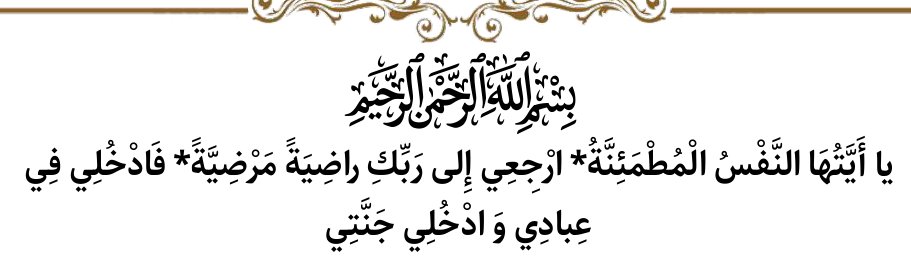
O satisfied soul, return to your Lord wellpleased, wellpleasing. Join My worshipers and enter My Paradise!
(Surah Mubaraka Fajr v. 27-30)
Part Three
The "tranquil soul" (nafs al-mutma’inna), which has been interpreted by Imam al-Sadiq (p) as "the soul that is tranquil in [its faith in] Mohammad, his successor, and the Imams after him (p)" (1), in its most complete and perfect meaning, refers to the "absolute believer." As it is also said: "The tranquil soul, it is the one whose entire being is absolute and pure goodness." (2)
The one whose entire being is pure and absolute goodness, the most exalted, and the chosen among the believers. In other words, the very essence of the “nafs al-mutma’inna” is the most complete manifestation of the soul in the realm of existence, and that is none other than the noble being of Hazrat Qamar al-Hashemites, Abal-Fadl al-‘Abbas (p); the one who has the highest rank and demonstrated the most complete and perfect obedience in the Wilayat of Hussain (p). (3) He is the possessor of the greatest and most noble Nafs (soul) in existence, the one who sacrificed his very soul in the battlefield of Karbala, the land of servitude to God, for the sake of Hazrat Aba Abdillah al-Hussain (p). Through this, he attained the highest rank of liqa’ Allah (meeting with God). As explicitly stated in the words of Ziyarat al-Nahiya al-Muqaddasa:

(4) “The one who, with perfect selflessness, sacrificed himself for his brother Hussain (p).”
Thus, the leader of the companions of Hussain (p), our master Abal-Fadl al-‘Abbas (p), is the exemplar, guide, and spiritual leader for all of creation in the path of self-sacrifice for Hazrat Aba Abdillah al-Hussain (p).
This act of self-sacrifice becomes the cause for the return of creation and their turning back to the Divine Lord.

In other words, the true meaning of raj‘ah, which is the return to one's original essence (5), takes place in the world through following and being guided by the tranquil soul (nafs al-mutma’inna), our master Abal-Fadl al- ‘Abbas (p). By sacrificing himself and entering among the servants [of God] for the sake of creation’s guidance and leadership, he prepared the ground for the return (raj‘ah) and turning back [to God] for all of creation.
This act of self-sacrifice is the fruit of the school of the mother of al-‘Abbas, the Lady of Baqi‘, noble lady Umm al-Banin (p), who, through her radiant words, made all those endowed with intellect and granted life (all those under the sky) into sacrifices for Hazrat Aba Abdillah al-Hussain (p), by her divine command of “Be, and it is” (kun fa-yakūn). (6)
In other words, the noble exemplar for righteous women, Lady Umm al- Banin (p), through her statement, “My sons and all those under the sky are sacrifices for Aba Abdillah al-Hussain (p)”

Not only defined the true criterion of honor, which is self-sacrifice, but also first introduced those who are the noblest, the guides, and the role models of creation in self-sacrifice, namely, “my sons”, and then mentioned “those under the sky”.
Thus, all those endowed with intellect and granted life, through being nurtured in the school of Umm al-Banin (p) and by following the example of her noble sons, attain the status of self-sacrifice, reach true honor and perfection, and ultimately return to their original essence.
┅═✧❁ REFERENCES ❁✧═┅ (1). Tafsīr Furāt al-Kūfī, p. 554 (2). Al-Ṣirāṭ al-Mustaqīm ilā Mustaḥiqq al-Taqdīm, vol. 1, p. 122 (3). Because the fullest and absolute meaning of “the tranquil soul” (al- nafs al-muṭma’inna) is embodied in Hazrat Aba Abdillah al-Hussain (p): “Al-Hussain ibn Ali, he is the one with the tranquil soul.”: Ta’wīl al-Āyāt al- Ẓāhira fī Faḍā’il al-‘Itra al-Ṭāhira, p. 769 (4). Iqbāl al-A‘māl, vol. 3, p. 74 (5). Biḥār al-Anwār, vol. 64, p. 106, [From Imam al-Bāqir (p): “…everything returns to its origin, its essence, and its element.”] (6). The radiant statement of Lady Umm al-Banin (p) regarding the sacrifice of her sons and all under the sky (man taḥta al-khaḍrā’) is constructed as a nominal sentence (jumlah ismiyyah), which indicates certainty and permanence. (7). Tanqīḥ al-Maqāl fī ‘Ilm al-Rijāl, vol. 3, p. 70, [My sons and all the people of the heavens and the earth are sacrifices for Hazrat Aba Abdillah al-Hussain (p).]
misbah-inc.com