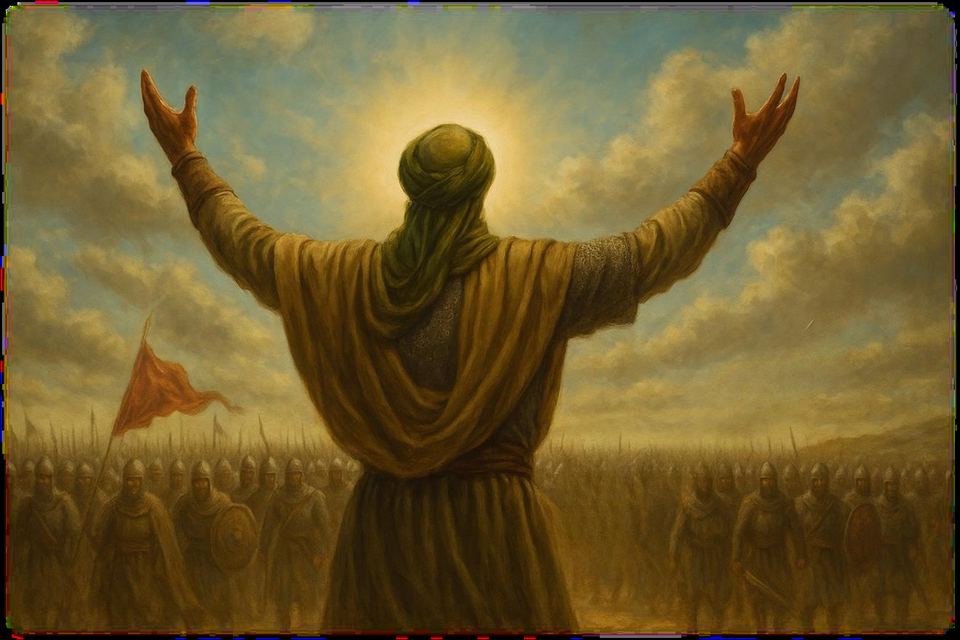
The Conqueror
In the fifth year after Hijrah, the Quraysh gathered together and went to other Arab tribes, seeking their help and inciting them to wage war against the Messenger of God (PBUH&HF).
As a result, ten thousand warriors were assembled, and several tribes united against the Messenger of God.
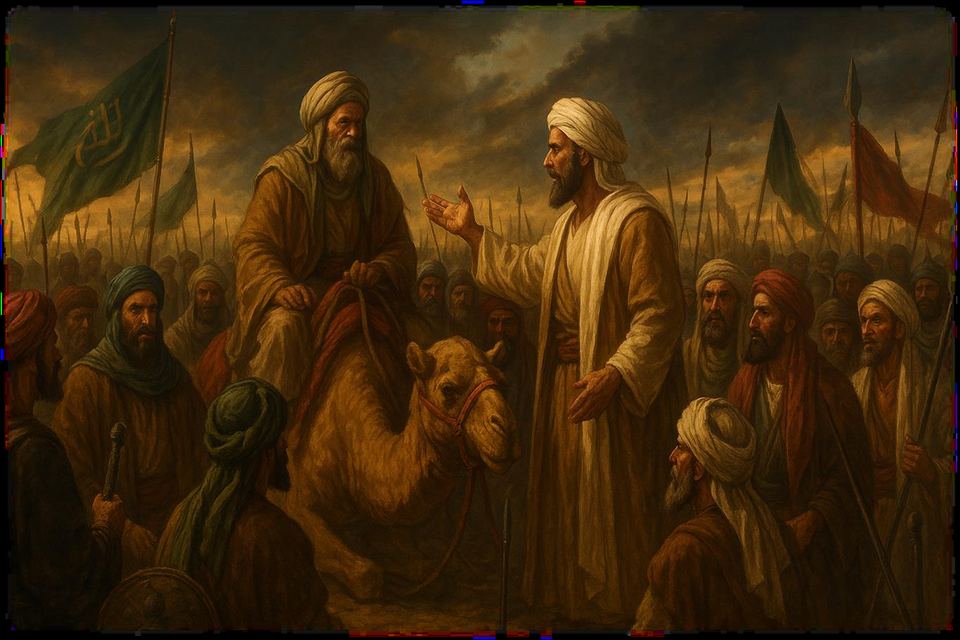
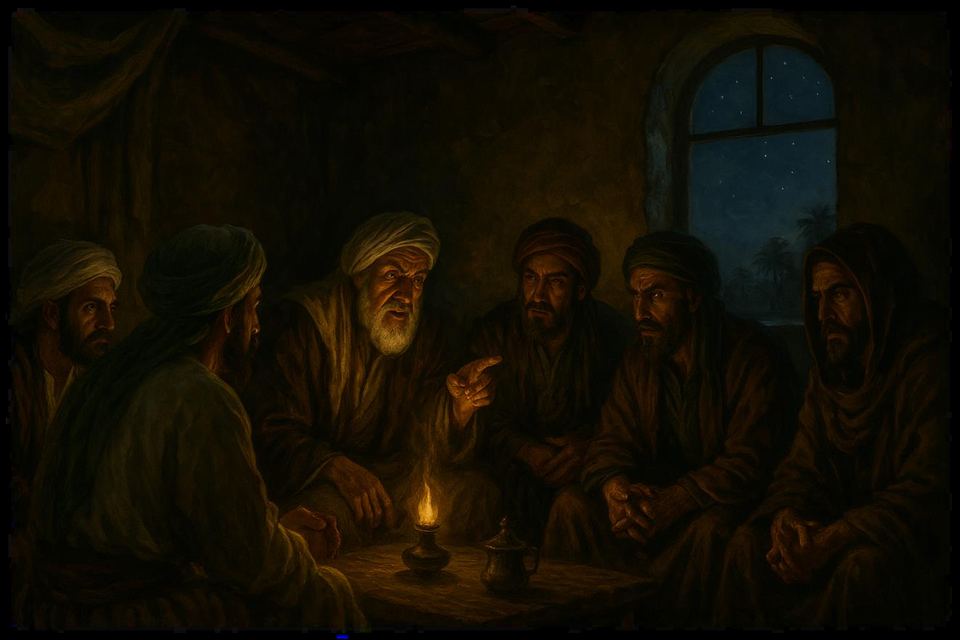
The leader of one of those tribes set out for Mecca and came to the Quraysh. He said to them: “Mohammad has wronged both us and you. He drove us out of Medina—our homeland—and took our properties, and he expelled our cousins as well. So go forth across the land and gather your allies and others, that we may march against Mohammad. For in Yathrib, among my people, there remain seven hundred fighting men. Although they have a treaty with Mohammad, I will compel them to break their covenant and stand beside us against him. That way, you will attack him from the front, and they from behind.”
This news reached the Messenger of God (PBUH&HF), and he consulted with his companions, who themselves numbered only seven hundred. Salman said, “O Messenger of God! When the war is prolonged, a small group cannot withstand a large army.”
The Messenger of God (PBUH&HF) asked, “Then what should be done?” Salman replied, “We should dig a trench to create a barrier between us and them. With this, even if the battle drags on, you can prevent them from advancing, and they will not be able to attack us from every direction.”
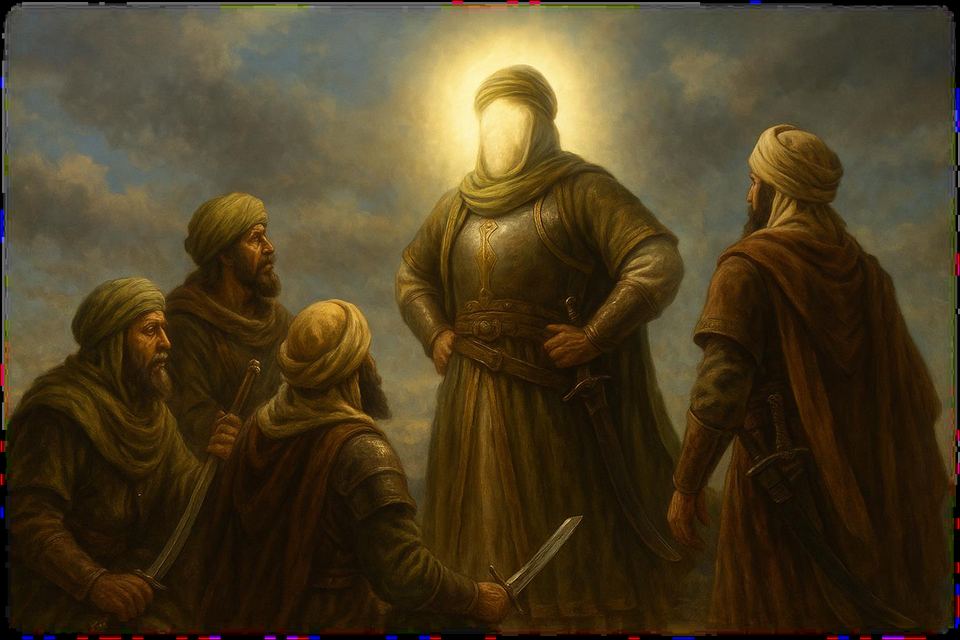
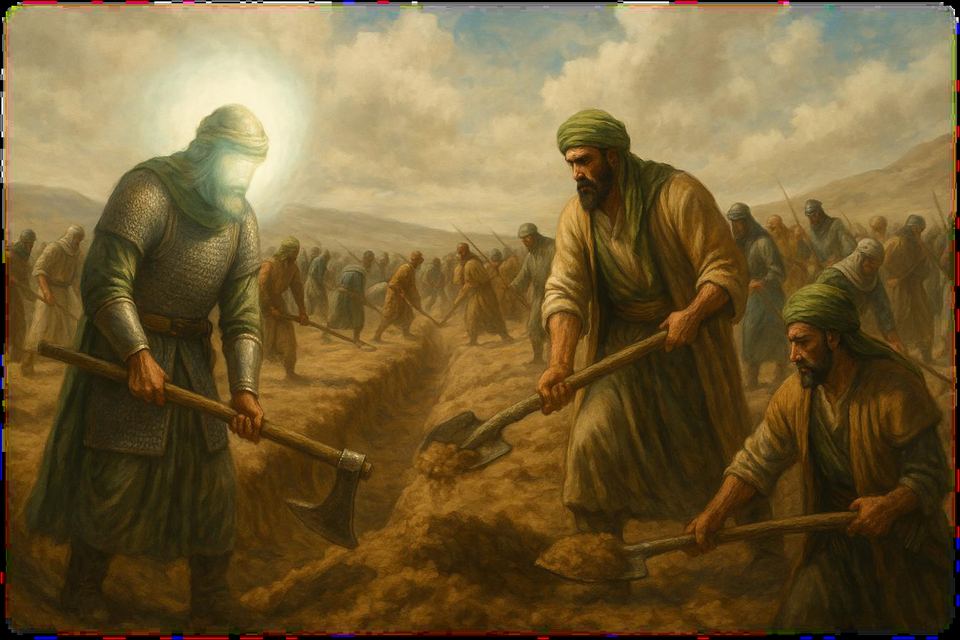
At that moment, Gabriel (PBUH) descended upon the Messenger of God (PBUH&HF) and said, “Salman has given a good suggestion.” So the Messenger of God (PBUH&HF) ordered that the battlefield be measured, and every twenty or thirty steps, a group from among the Muhājirūn and the Anṣār was stationed to begin digging the trench. Then the Prophet (PBUH&HF) gave the command to bring pickaxes and shovels. He himself took a pickaxe and began digging in the section of the field assigned to the Muhājirūn, while Amīr al-Mu'minīn (PBUH) carried the dirt from inside the trench and emptied it outside.
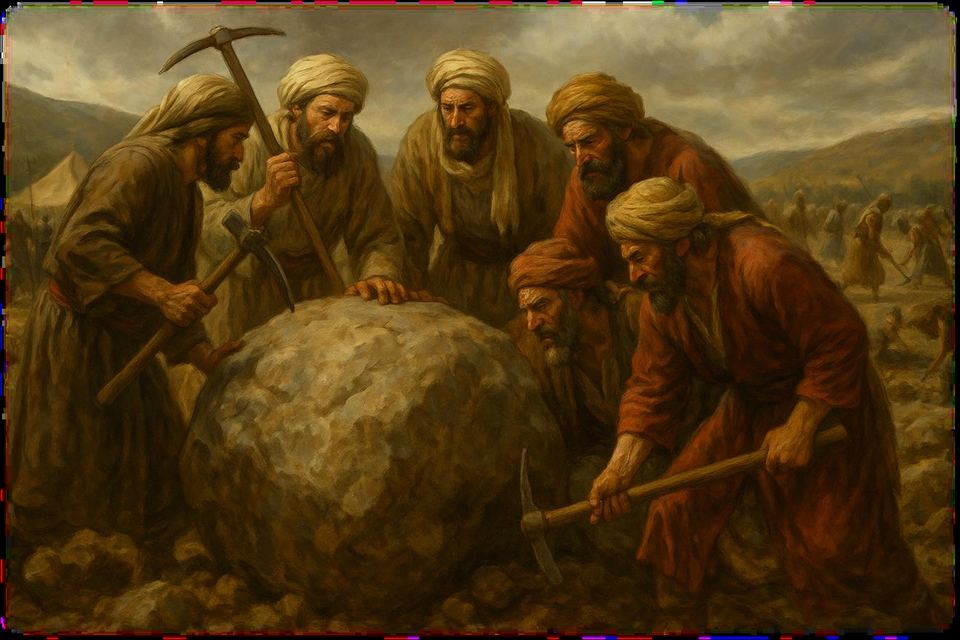
On the second day, from early morning, the companions of the Prophet (PBUH&HF) were busy digging the trench, while the Messenger of God (PBUH&HF) was seated in the Mosque of Fath. As the Muhājirūn and Anṣār continued their work, they came upon a large rock that their pickaxes could not break. So, they sent Jābir ibn ʿAbdullāh al-Anṣārī to inform the Prophet (PBUH&HF) of the issue. Jābir says: I went to the mosque and said, “O Messenger of God! We have come across a rock that the pickaxes cannot break.” Upon hearing this, the Prophet (PBUH&HF) rose and quickly went toward the rock.
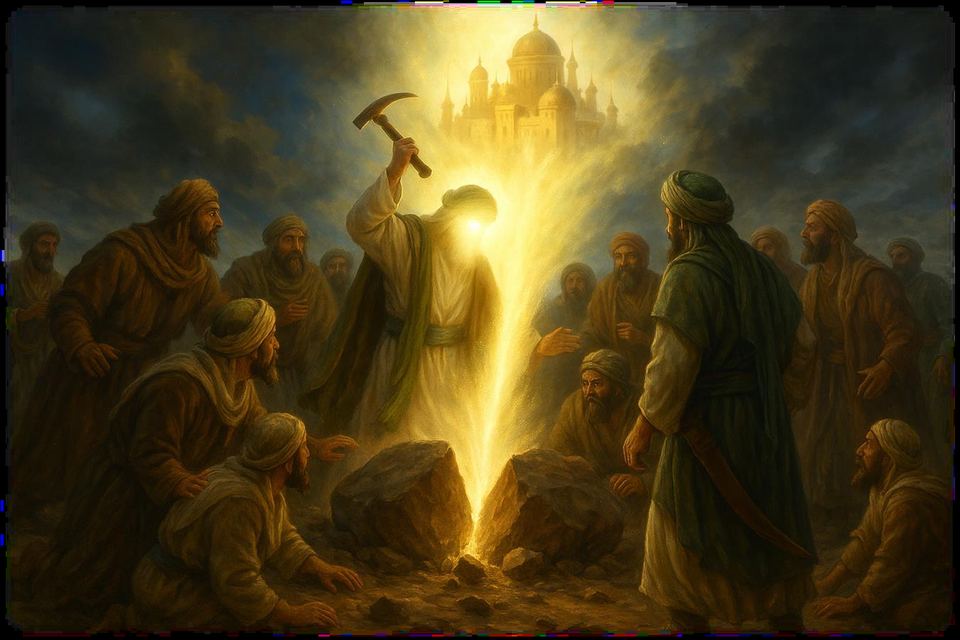
The Prophet (PBUH&HF) took a pickaxe and struck the rock. A flash of light appeared, and in its glow, we saw the palaces of Syria. He struck the rock a second time, and another flash burst forth—in its light, we beheld the palaces of Mada’in (Ctesiphon).
Then he struck it a third time, and once again a flash appeared, revealing to us the palaces of Yemen. The Messenger of God (PBUH&HF) said: “God shall open these lands to you, and you will conquer them.” After that, the rock crumbled completely, as grains of sand scatter apart.
Finally, the Quraysh arrived at the trench. When they saw it, they said, “This is a strategy never before seen among the Arabs.”
Some of them remarked to the Quraysh, “This plan is the idea of a man from Persia who supports Mohammad (PBUH&HF).”
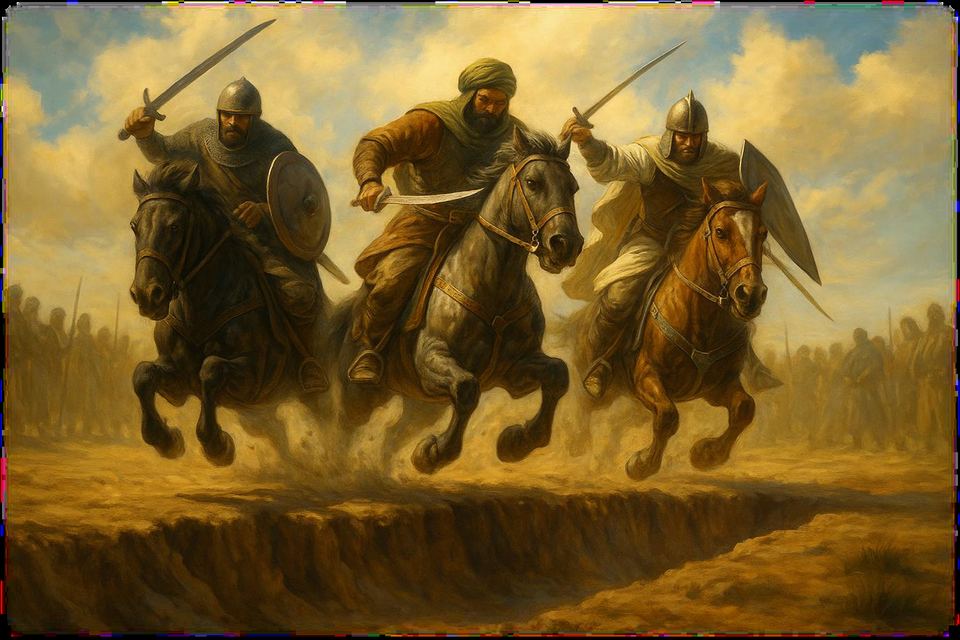
At that moment, ʿAmr ibn ʿAbd Wudd, Hubayrah ibn Wahb, and Ḍirār ibn Khaṭṭāb reached the trench, while the Messenger of God (PBUH&HF) was arranging his companions in rows before him. The three horsemen shouted fiercely and urged their horses forward, leaping over the trench and entering the side where the Messenger of God (PBUH&HF) was present.
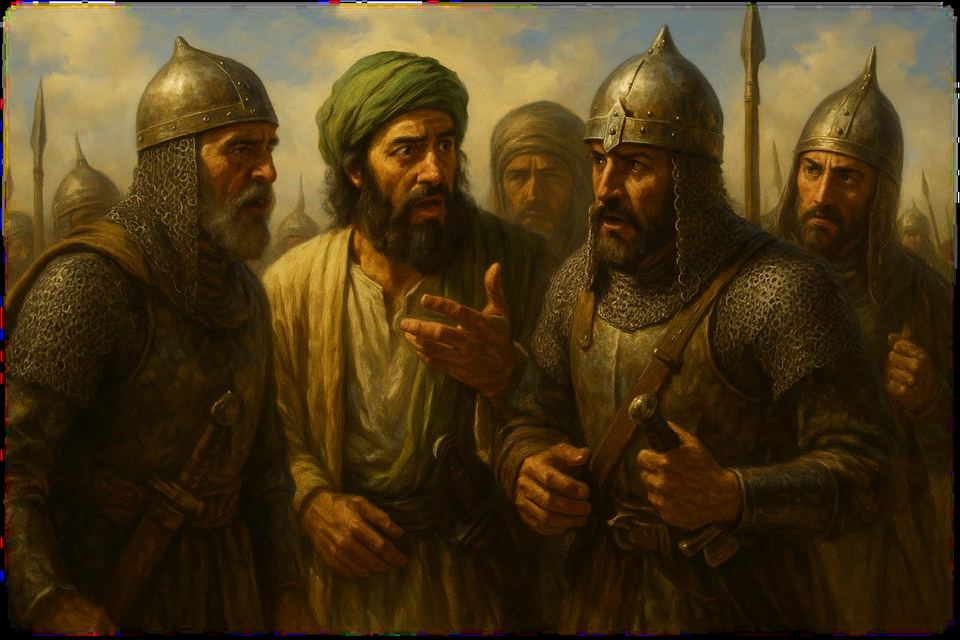
All the companions of the Messenger of God (PBUH&HF) gathered behind him, and they put the Prophet (PBUH&HF) forward. One of the Muhājirīn turned to the man beside him and said: “Do you see that devil—ʿAmr? By God, no one escapes alive from his hands. Let us push Mohammad (PBUH&HF) forward to fight ʿAmr, and we can return to our people.”
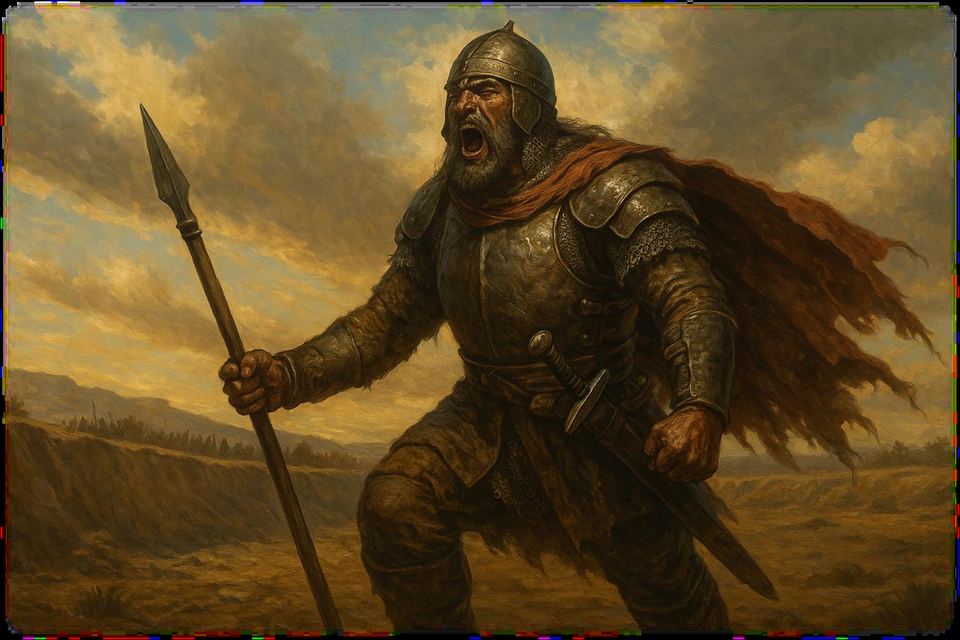
ʿAmr ibn ʿAbd Wudd planted his spear into the ground and began riding around it, boasting proudly as he recited:
“I have called out ‘Is there anyone to challenge me?’ so many times that my voice has grown hoarse! And now I stand in a place of great peril and trembling— A place where even the bravest of warriors fear to stand.”
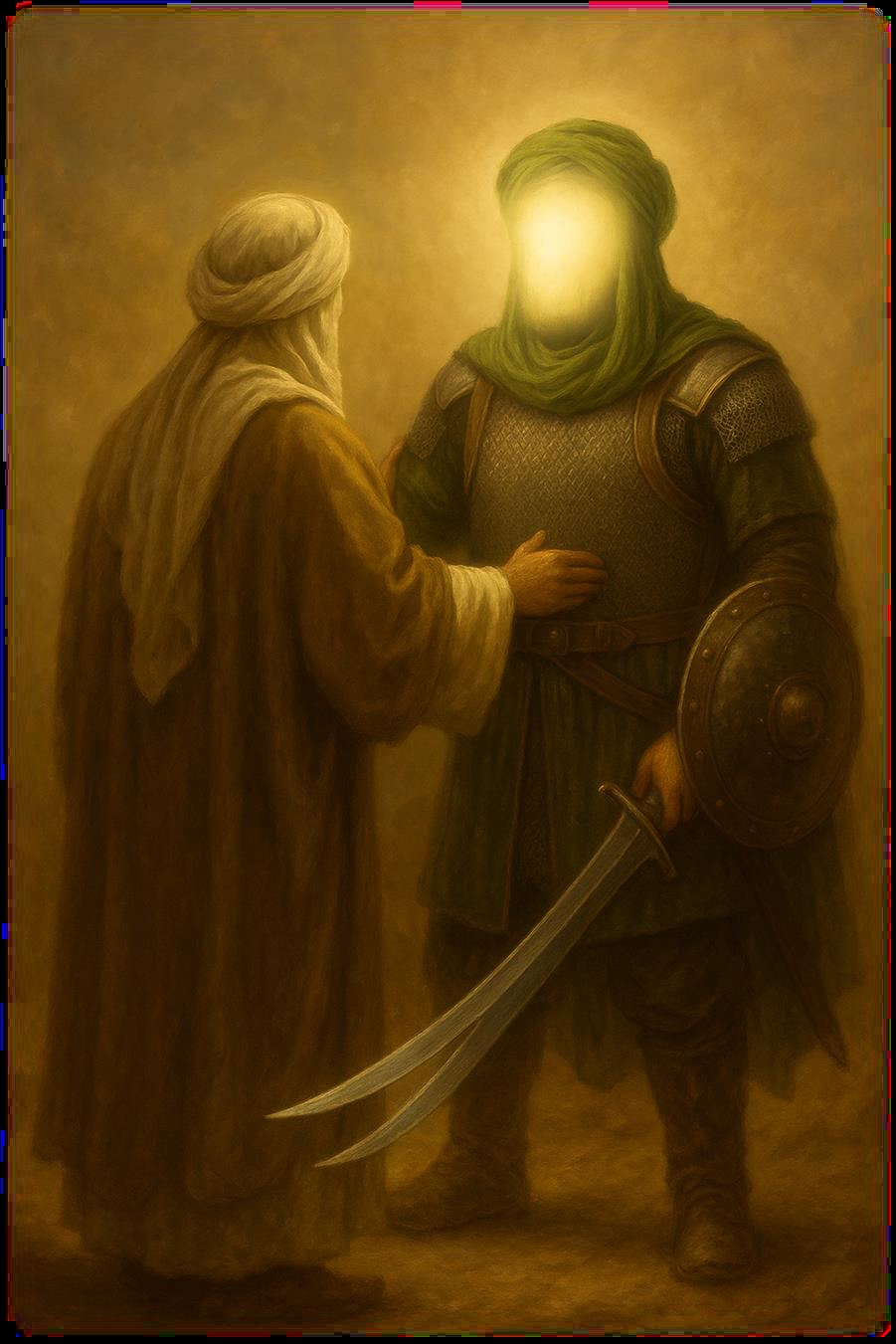
The Prophet (PBUH&HF) said three times, “Which one of you will face ʿAmr in combat, and I will guarantee Paradise for him before God?”
Each time, ʿAlī (PBUH) rose to his feet, while the others lowered their heads in silence. Then the Prophet (PBUH&HF) called him forward, wrapped a turban upon his head, placed his sword, Dhū al-Faqār, in his hand, and said, “Go, and fight this man.”
The Messenger of God (PBUH&HF) also said, “O God! Protect him from in front of him, behind him, to his right, to his left, from above, and from beneath.”
Amīr al-Mu’minīn (PBUH), hastening toward the battlefield, called out: “Do not rush! For the one answering your call is a man of strength, A man of will and vision— Truly, he is the salvation of all the redeemed.”
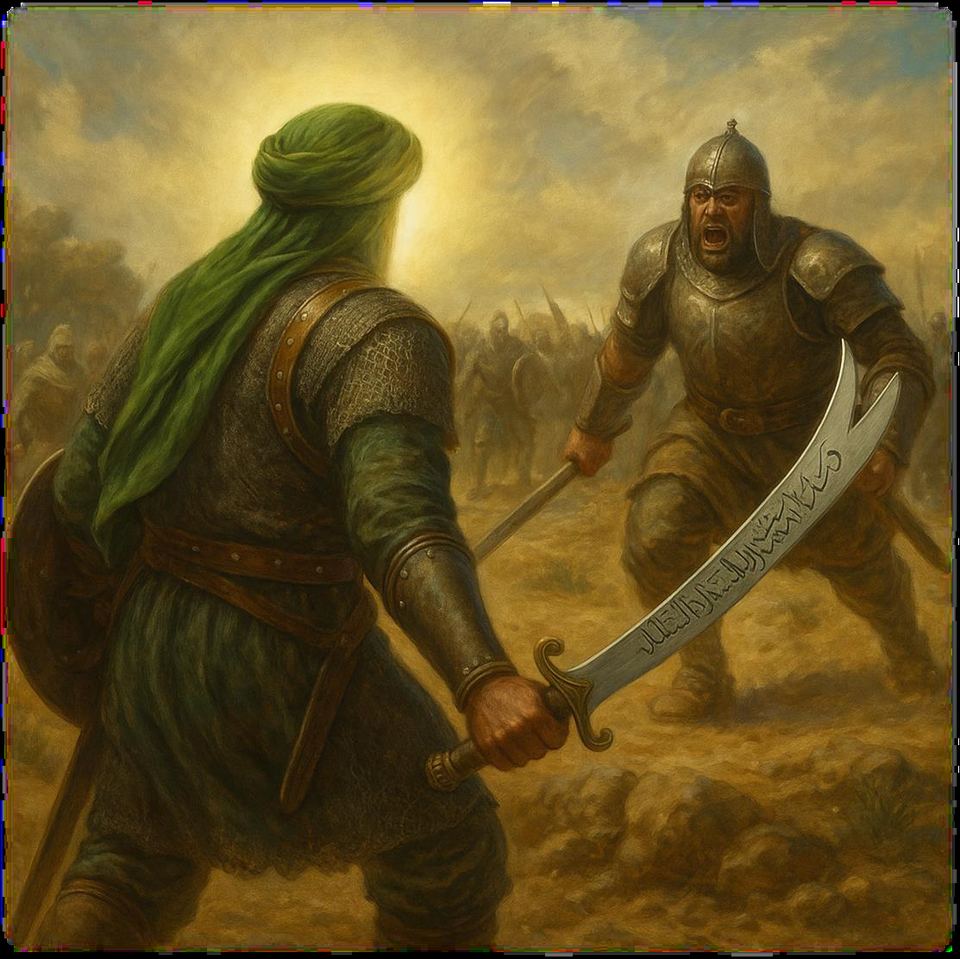
ʿAmr said to ʿAlī (PBUH), “Who are you?”
ʿAlī (PBUH) replied, “I am ʿAlī ibn Abī Ṭālib, the cousin of the Messenger of God (PBUH&HF) and his son-in-law.”
ʿAmr said, “By God, your cousin will not be safe after sending you to face me.”
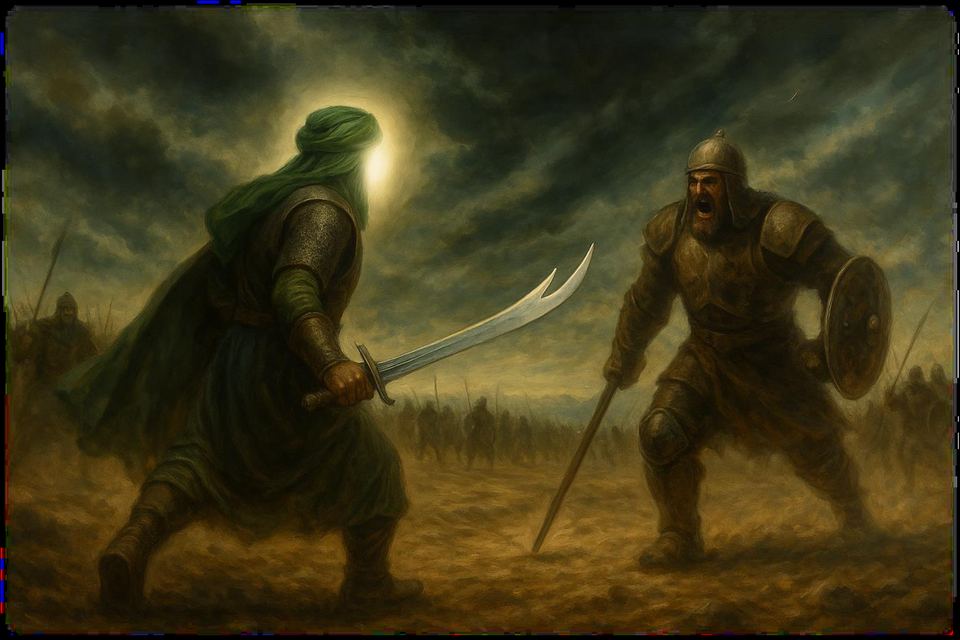
Amīr al-Mu’minīn (PBUH) responded, “My cousin knew well that if you kill me, I will enter Paradise and you will enter Hell; and if I kill you, then too you will go to Hell, while I will enter Paradise.”
ʿAmr replied, “O ʿAlī! Paradise and Hell—let both be yours!”
Then ʿAmr initiated the battle, striking with his sword at the head of ʿAlī (PBUH). ʿAlī (PBUH) raised his shield to block the blow, but the force of the strike was so great that it shattered the shield, and the sword reached his head and became lodged there.
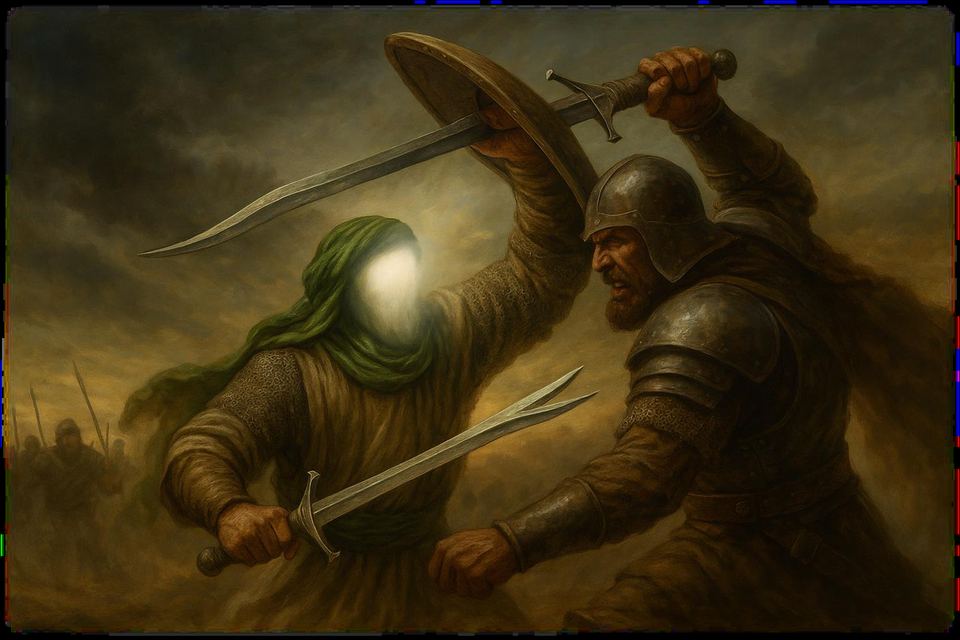
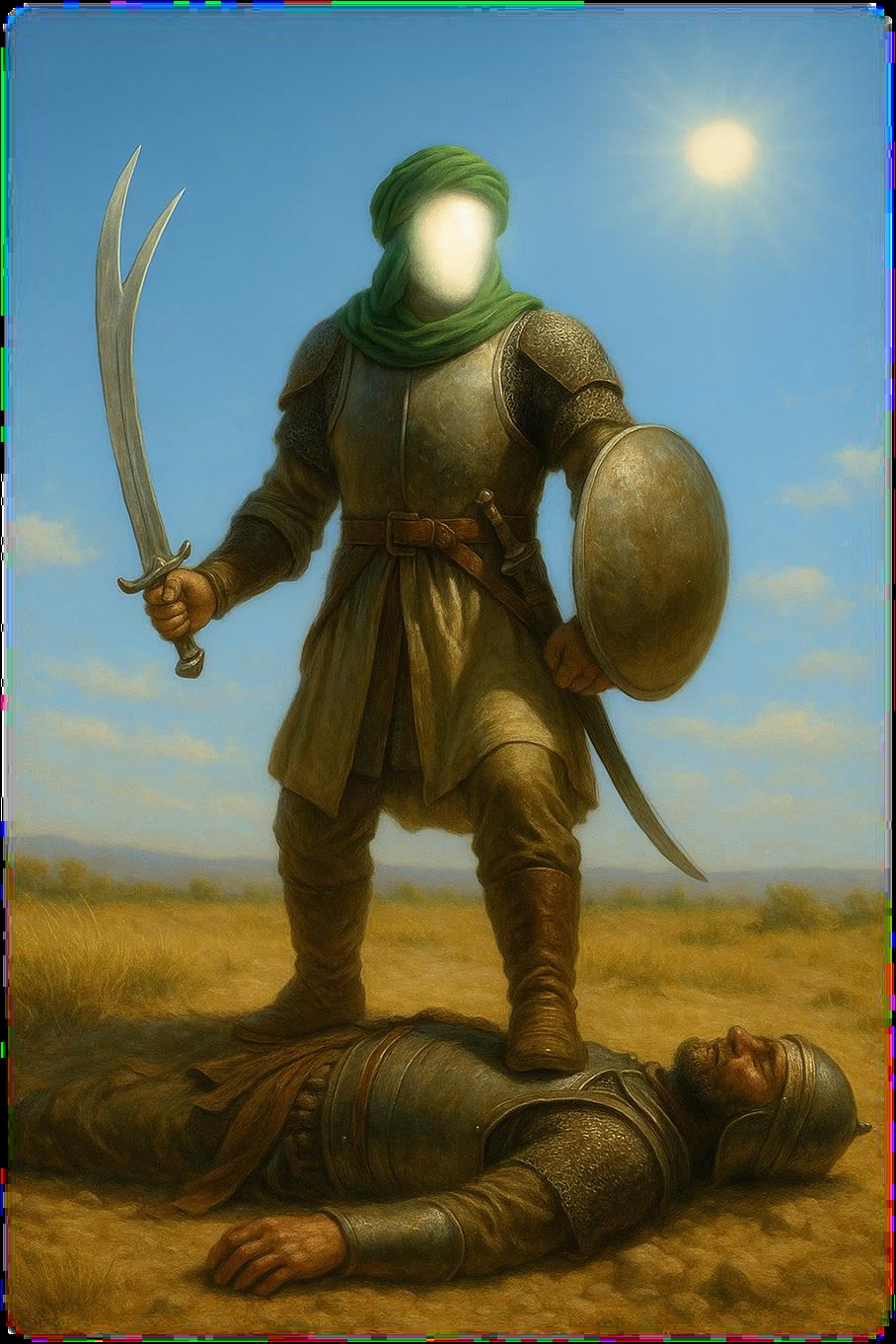
As the two clashed, a cloud of dust rose into the air. Amīr al- Mu’minīn (PBUH) swiftly threw ʿAmr to the ground and mounted his chest. When he was about to strike the final blow, reciting praises and glorifying God, ʿAmr said, “O ʿAlī! When you kill me, do not take my clothes and weapons.”
ʿAlī (PBUH) replied, “Your clothes and weapons are too worthless in my eyes for me to take them from you.”
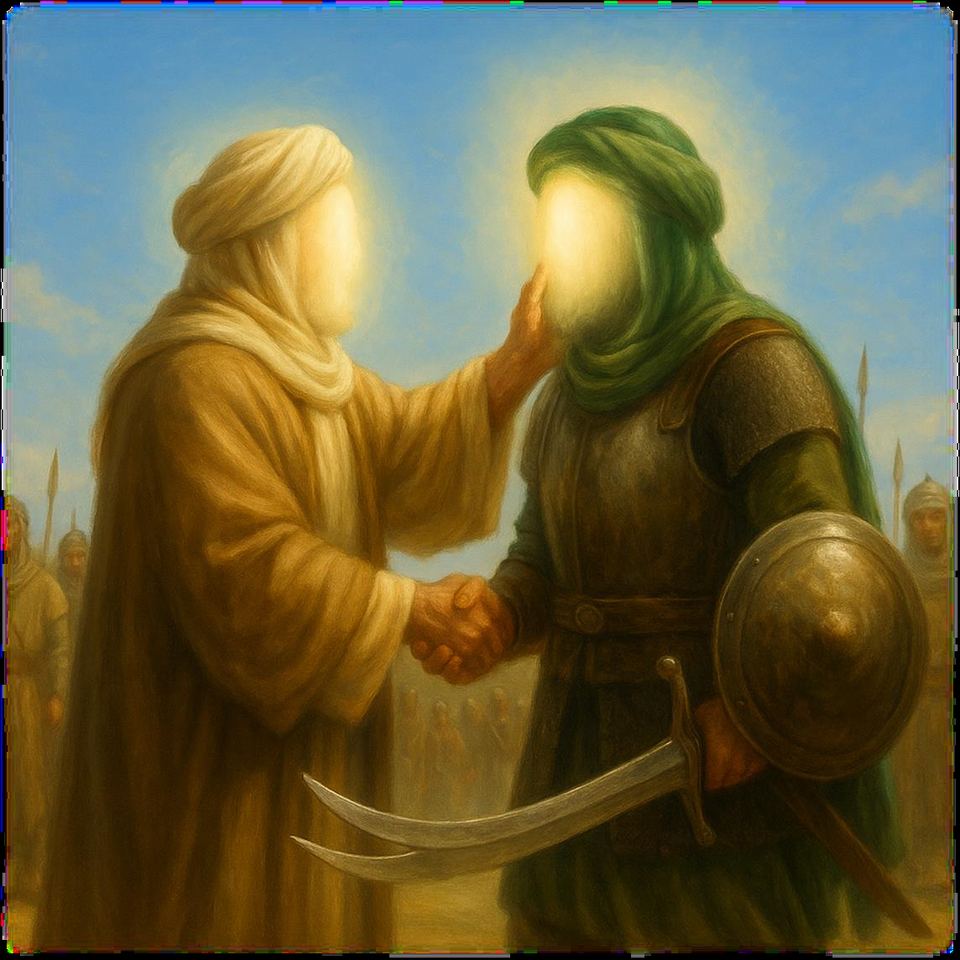
Then ʿAlī (PBUH) killed that accursed man and returned to the Messenger of God (PBUH&HF). The Prophet came forward to greet him, wiped the dust from his eyes, and said:
“If your deed today were placed on one side of the scale and the deeds of the entire nation of Mohammad on the other, your deed would outweigh them all. For there is no household among the idolaters that has not been humiliated by the death of ʿAmr, And there is no Muslim household that has not gained honor and dignity because of his death.”
After the battle, ʿAlī (PBUH) recited:
“O coalition of tribes! Do not imagine that God will forsake His religion or abandon His Prophet!”
When ʿAlī (PBUH) struck down ʿAmr, a voice was heard— though no speaker was seen—proclaiming:
“ʿAlī has slain ʿAmr! ʿAlī has broken the enemy’s back! ʿAlī has brought the battle to its end!”
The idolaters were defeated, overwhelmed by fear and dread, and the groups of enemy scattered in panic and fled.